
What Causes Hydraulic System Failure in Industrial Machinery?
Nov 18, 2026
What Causes Hydraulic System Failure in Industrial Machinery?
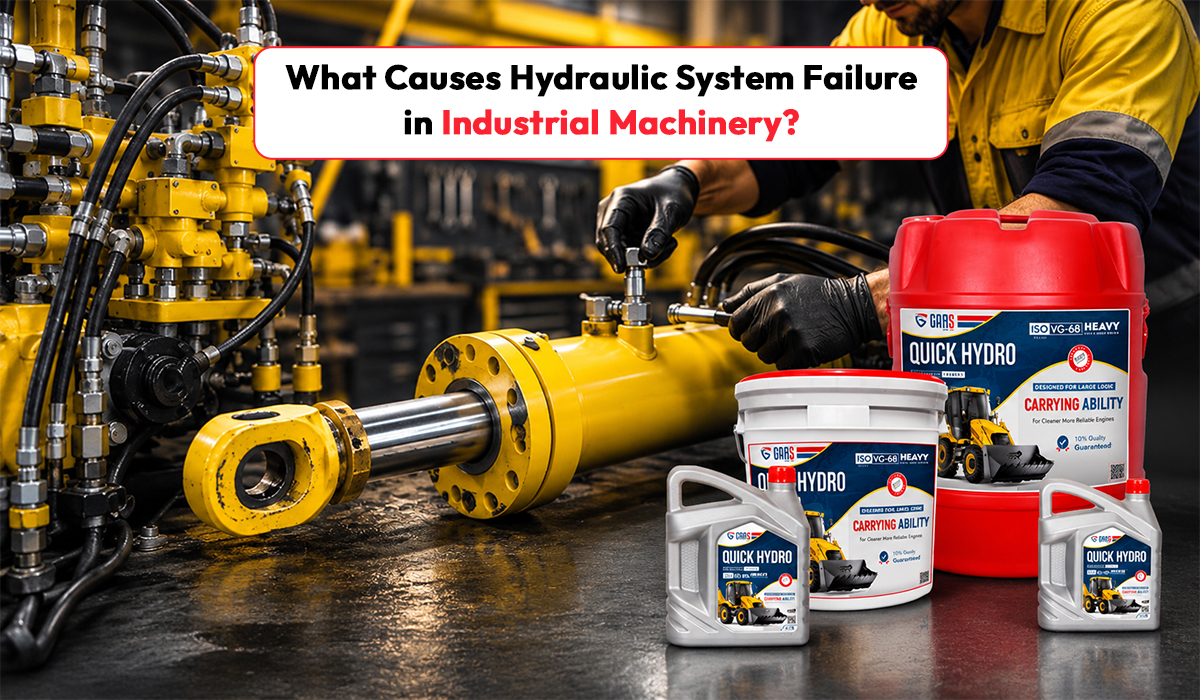
What Goes Wrong Inside a Hydraulic System, and How to Spot It Early
Picture a press that drops pressure in the middle of a shift, an excavator arm that drifts when it should lift, or a crane that shudders with a load on. Hydraulics power a lot of the equipment in construction, manufacturing, oil and gas, and marine work, so one weak system holds up everything around it. Almost every case of hydraulic system failure can be traced back to a cause, and the machine usually gives some warning first. If you catch it then, you avoid the stoppage. Below are the seven most common causes, the signs to watch for, and the maintenance habits that protect both the oil and the machine.Need a reliable hydraulic oil supplier in UAE?
7 Common Causes of Hydraulic System Failure
1. Hydraulic Oil Contamination
Dirt, dust, metal particles, and water enter hydraulic systems more easily than people expect, through worn seals, dirty breathers, open reservoirs, or unclean top-ups. Once contaminated oil is circulating, it acts like a fine abrasive. It increases friction, wears internal parts, blocks small valve passages, and restricts flow. Pumps and servo valves are the most sensitive, and they are also the most expensive to replace. Many hydraulic system problems that look like pump faults started with dirty oil.2. Hydraulic System Overheating
Every hydraulic system makes heat. Trouble starts when more heat builds up than the system can shed. Hot oil thins out, so it protects less. It also oxidises faster, forming sludge and varnish that coat valves and clog filters. Seals harden and wear speeds up. In the UAE, high ambient temperatures and long working hours on site make temperature control even more important. A cooler that is clogged with dust or an oil level that has dropped can tip a system into overheating quickly.3. Incorrect Hydraulic Oil Viscosity
Hydraulic oil needs the viscosity the equipment manufacturer specifies. If the oil is too thin, internal leakage rises, pumps lose efficiency and parts get less protection under load. If it is too thick, it resists flow, slows the machine and makes the pump work harder, especially at start-up. A mismatch rarely causes an instant breakdown. It shows up as sluggish movement, extra heat and shorter component life.4. Hydraulic Pump Failure
The pump keeps pressure and flow going, so when it fails, nothing else works properly. Common reasons include internal wear, not enough oil reaching the pump, and cavitation or aeration, where vapour bubbles form and collapse inside the pump and damage its surfaces. You will often hear it first. A whine, knock, or rattle from the pump, along with lower operating performance, usually means something is wrong on the supply side or inside the pump itself.5. Air and Water Contamination
Air gets in through damaged seals or loose connections. It makes the oil foam, which causes pressure to fluctuate and the machine to feel erratic. Water has a different effect: it corrodes metal surfaces and weakens the oil’s ability to lubricate. Stopping air and water getting in costs far less than repairing what they damage. Check fittings, seals and the condition of the oil in the reservoir.6. Worn Seals and Hydraulic Fluid Leakage
Seals harden, crack, and wear. When that happens, oil leaks out and air and dirt get in. The result is pressure loss, a falling oil level and a machine that never quite performs as it should. A small drip is easy to ignore. Over weeks it can leave a system running low on oil, which also drives up heat and wear.7. Poor Hydraulic System Maintenance
A lot of hydraulic machinery failure comes down to missed basics: components that are not inspected, strange sounds that are ignored, early signs of wear that go unnoticed, and manufacturer schedules that are not followed. Good hydraulic system maintenance is rarely dramatic. It is regular checks done on time.Warning Signs of Hydraulic System Failure
Operators usually notice something before the breakdown. Watch for:- Slow or weak machine operation
- Unusual noises from the pump
- Excessive operating temperature
- Inconsistent or fluctuating pressure
- Visible oil leakage
- Jerky or irregular movement
- Increased vibration
How Can Businesses Prevent Hydraulic System Failure?
- Use hydraulic oil that meets the equipment specification
- Check oil condition regularly
- Inspect pumps, seals and hydraulic connections
- Keep operating temperatures within a sensible range
- Replace filters and components on schedule
- Investigate unusual noise, vibration and pressure changes straight away
- Arrange periodic hydraulic system inspections
Choosing the Right Hydraulic Oil for Industrial Machinery in UAE
Oil selection sits behind many of the causes above. The right oil protects pumps, resists breakdown under heat and keeps pressure stable. When choosing hydraulic oil, look at:- Viscosity grade: it should match the equipment manufacturer’s specification
- Anti-wear protection: important for pumps and other precision components
- Oxidation resistance: especially where operating temperatures run high
- Manufacturer approval: always follow the OEM recommendation
Conclusion
Most hydraulic system failures trace back to a short list: contamination, overheating, wrong viscosity, pump problems, air and water, worn seals and missed maintenance. The warning signs usually appear first, so checking oil condition and listening to the machine pays off. Choose oil that meets the manufacturer’s specifications and keep up with inspections. GARS Lubricants is a hydraulic oil manufacturer and supplier serving industrial lubricant requirements in the UAE, and the team can help you choose a suitable grade.FAQ's
What is the most common cause of hydraulic system failure?
Contaminated fluid is one of the biggest causes. Dirt, water and metal particles wear internal parts, block valves and damage pumps.How do you know if a hydraulic pump is failing?
Look for unusual noise, falling pressure, overheating and inconsistent performance. If you notice any of these, have the pump looked at.Can overheating damage a hydraulic system?
Yes. Heat thins the oil, speeds up oxidation and shortens the life of seals and components.How often should hydraulic systems be inspected?
It depends on the equipment, how hard it works and the manufacturer’s guidance. Machines working long hours in hot, dusty conditions need more frequent checks.Recent Post
Top Categories
Popular Products