
Best Engine Oil for Cars in UAE: Expert Tips for Better Engine Performance
Jul 23, 2026
Best Engine Oil for Cars in UAE: Expert Tips for Better Engine Performance
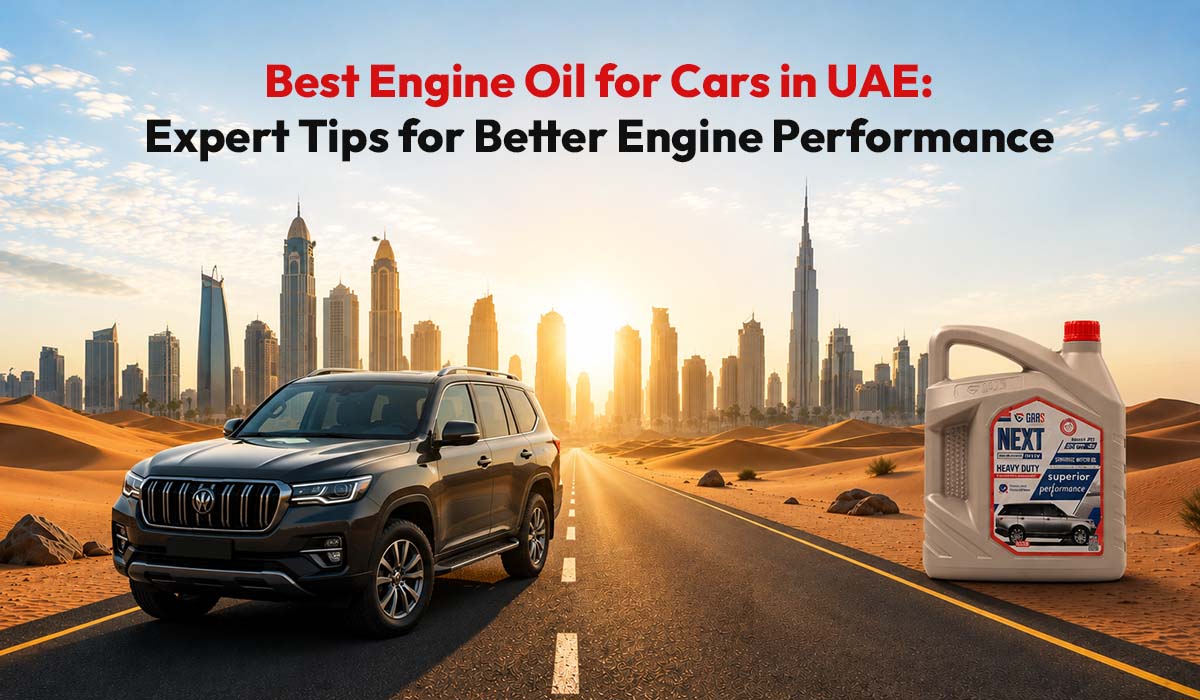
Best Engine Oil for Cars in UAE - What Actually Protects Your Engine in This Climate
Most car owners in the UAE know they need to change their engine oil. What goes into the engine gets far less attention than when it gets changed - and in a place where summer heat pushes engines harder than almost anywhere else on the planet, that gap between awareness and action is where the damage starts. The best engine oil for cars in UAE is not necessarily the most expensive one on the shelf or the brand with the loudest advertising. It is the one that matches your vehicle's specification, handles the heat your engine generates through UAE summers, and holds its protective properties long enough to actually cover the service interval it was sold on. This guide covers everything you need to make that decision with confidence - viscosity grades, oil types, UAE-specific driving conditions, and the signs that tell you something is already wrong.The Engine Oil Decision Most UAE Drivers Get Wrong
Engine oil does several jobs simultaneously - and it does all of them every time the engine runs. It lubricates moving metal surfaces, carries heat away from components that cannot be directly cooled, keeps combustion byproducts suspended rather than allowing them to settle as deposits, and protects against corrosion between oil changes. When the oil is right for the engine and the conditions, all of that happens quietly in the background. When it is not:- Engine wear accelerates - the protective film between metal surfaces thins under heat, and metal-to-metal contact increases with every kilometre
- Fuel efficiency drops - oil that has thickened or degraded creates more internal resistance, and the engine burns more fuel compensating for it
- Engine performance suffers - rough idling, sluggish response, and increased noise all follow degraded lubrication
- Engine life shortens - accumulated wear over thousands of kilometres adds up to earlier and more expensive component failure
Running your car in uae heat? Make sure it has the right engine oil.
What UAE Conditions Actually Do to Engine Oil
The UAE is not a standard operating environment for a car engine. The combination of factors that vehicles deal with here is genuinely demanding - and standard global oil change recommendations do not fully account for it.High Ambient Temperatures :
Summer temperatures regularly exceed 45°C in the UAE. Under a bonnet sitting in direct sun, the engine bay temperature climbs considerably higher than that before the car has even moved. Engine oil that cannot maintain its viscosity and protective properties under sustained heat starts failing at exactly the point the engine needs it most.Heavy Traffic :
Stop-start driving in Dubai, Abu Dhabi, and Sharjah keeps the engine working at low speed under high thermal load for extended periods. Oil circulates less efficiently at idle than at highway speed - and heat builds up faster than it dissipates.Long Distance Highway Driving :
UAE highways are fast and distances are long. Engines running at sustained high speeds generate consistent heat output that oil needs to handle without thinning out or oxidising prematurely.Desert and Dust Exposure :
Sand and fine dust particles that enter the engine contaminate oil faster than clean-air environments. Oil that already carries contaminants from combustion byproducts fills up faster when desert dust adds to the load.Combined Effect :
No single one of these factors is unusual in isolation. The combination of all of them operating together - often in the same day - is what makes the UAE one of the most demanding environments for engine oil on the planet.How to Choose the Best Engine Oil for Cars in UAE
Manufacturer's Recommendations :
Start here and do not move far from it. Your vehicle manufacturer's recommended oil grade is the specification the engine was designed and tested around. It accounts for the engine's internal tolerances, operating temperature range, and service interval expectations. Deviating from it - even to a closely related grade - can affect oil pressure, fuel economy, and long-term protection.Engine Oil Viscosity Grades :
Viscosity is how engine oil is graded for flow characteristics. The two most common grades in UAE vehicles are: 5W30 : Flows quickly at startup, maintains adequate body at operating temperature. Widely specified for modern passenger vehicles and a strong performer in UAE heat when in fully synthetic form. Our detailed 5W30 oil guide covers this grade in depth. 5W40 : Slightly thicker at operating temperature than 5W30, providing a stronger protective film under high load. The grade that works hardest for performance vehicles, SUVs, and anything that spends time under heavy load in UAE heat. 10W40 : A common grade for older petrol engines and some diesel applications. Thicker cold-start flow than 5W grades but still performs reliably across the UAE temperature range.Synthetic vs Semi-Synthetic vs Mineral Oil
Fully Synthetic : This is the grade built specifically for conditions like the UAE - sustained heat, heavy traffic, long highway runs, and engines that do not get much of a rest. Fully synthetic oil handles all of that better than the alternatives, lasts longer between changes, and provides stronger protection when temperatures climb. Most modern vehicles specify it for a reason. The higher price per litre is recovered through fewer services and an engine that stays cleaner over time. Semi-Synthetic : Half mineral, half synthetic - a deliberate blend that outperforms straight mineral oil without reaching fully synthetic price territory. It handles moderate heat well enough and suits vehicles where full synthetic is not specified. In UAE summer conditions pushed to their limits, it starts showing its ceiling before fully synthetic does - but for the right application it is a sensible middle ground. Mineral Oil : The most basic option - refined from crude and priced accordingly. Works adequately for older vehicles and light-duty use but breaks down under sustained heat faster than the other two. For a modern engine running through UAE summers, mineral oil is not where you want to start.Driving Conditions
City driving in Dubai or Abu Dhabi is not the same as covering the same distance on an open highway. Stop-start traffic generates heat per kilometre at a rate that highway cruising does not - and that heat has to go somewhere. If your daily commute runs through heavy urban traffic, go for a quality synthetic oil and do not try to stretch the change interval to its limit.Vehicle Age
An engine with 150,000 kilometres on it does not behave the same way as one with 30,000. Internal tolerances widen with wear, and oil pressure becomes more sensitive to viscosity than it is in a newer engine. A slightly higher viscosity grade sometimes compensates for that - but do not make that switch without talking to your workshop first. Getting it wrong on a high-mileage engine creates more problems than it solves.Engine Type
Petrol and diesel engines burn fuel differently, generate different combustion byproducts, and put different demands on the oil running through them. Not every engine oil grade covers both. Before buying, check that the API certification on the bottle actually applies to your engine type - assuming it does is one of the easier mistakes to make and one of the more expensive ones to fix.Benefits of Using High-Quality Engine Oil in UAE
Running quality oil in UAE conditions does not just protect the engine - it changes what the engine costs to run over time:- Better lubrication - the additive package in quality oil keeps a protective film between metal surfaces even through the hottest part of a UAE summer, where lesser oils start thinning out
- Heat resistance - synthetic formulations are built to hold their properties under the sustained thermal load UAE driving generates, rather than degrading before the service interval is up
- Cleaner engine - the detergent and dispersant additives in a well-formulated oil keep combustion byproducts moving through the system rather than settling as sludge on surfaces that are expensive to clean
- Reduced friction - oil with the right viscosity for the engine and conditions reduces the internal resistance the engine has to work against every time it runs
- Better fuel economy - less friction means less energy wasted, and that shows up in fuel consumption figures over the kind of distances UAE drivers cover
- Longer between changes - quality synthetic oil genuinely holds its properties longer, which means fewer services, less downtime, and lower annual maintenance costs
Signs Your Car's Engine Oil Needs Changing
Your car will usually signal a problem before it becomes a serious one - if you are paying attention:- Engine noise increasing - ticking, knocking, or general roughness at idle often means the oil film has thinned or contaminated
- Dark or gritty oil on the dipstick - fresh oil is amber coloured; very dark or gritty oil has run its course
- Oil warning light - do not delay on this one; it means oil pressure has dropped below safe levels
- Declining fuel economy - if consumption has crept up without an obvious reason, check the oil condition
- Burning smell from the engine bay - degraded oil burning off internal surfaces is a clear signal it is overdue
- Rough engine performance - sluggish response or inconsistent idle both point toward lubrication that is no longer doing its job properly
Mistakes UAE Car Owners Make With Engine Oil
Letting price make the decision : The cheapest oil on the shelf did not get there because the formulation is better. It got there because something in the production chain was reduced to hit that number. In UAE summer heat, that shortcut shows up inside the engine before too long. Picking up whatever viscosity is in stock : Running a grade that does not match your manufacturer's specification is not a minor deviation. It affects oil pressure, fuel consumption, and how well the engine is protected - even if the oil itself is high quality. The specification in your owner manual is there for a reason. Treating the change interval as a challenge : The recommended interval assumes standard conditions. UAE city traffic, sustained heat, and dust exposure are not standard conditions. Pushing to the maximum in this climate is a false economy that costs more in the long run than it saves. Mixing oil types when topping up : Synthetic oil topped up with mineral or semi-synthetic is no longer performing at synthetic level. The blend dilutes the additive package that makes the higher grade worth buying in the first place. Use the same type throughout - if you cannot find the right one, wait until you can. Running oil that does not carry the right API rating : An oil without the correct API certification for your engine type has not been tested to the performance standard your manufacturer built the engine around. In UAE conditions where the engine is already working hard, that untested gap matters more than it would in a forgiving climate.Practical Tips to Keep Your Engine Performing Well in the UAE
- Change engine oil on schedule - do not treat the recommended interval as a target to exceed in UAE conditions
- Check oil level monthly using the dipstick - UAE heat increases consumption in some engines
- Replace the oil filter with every oil change - a clogged filter reduces the effectiveness of fresh oil
- Follow your manufacturer's service schedule as the baseline and shorten intervals if most driving is urban
- Source oil from a reliable engine oil supplier in UAE who maintains consistent quality across batches
- Avoid overloading the vehicle regularly - extra weight generates extra heat that the engine oil has to manage
What to Look for When Choosing an Engine Oil Brand in UAE
Choosing the right brand matters as much as choosing the right grade. The brands worth trusting in UAE conditions share a recognisable set of characteristics:- Quality standards - current API certification for their products, not just historical claims
- Product testing - documented batch testing rather than assumed consistency
- Wide product range - the ability to cover different vehicle types, engine specifications, and viscosity grades
- Consistent performance - the same quality on the tenth order as the first
- Technical support - someone available to advise on grade selection for specific vehicles and conditions
- Availability - reliable supply without the gaps that force substitutions
Conclusion
The best engine oil for cars in UAE is not a brand decision - it is a specification decision. UAE heat, city traffic, and dust put engine oil under pressure that most other markets never create. The oil that holds up is the one matched to your vehicle, tested for those conditions, and changed before it runs out of road. Get the grade right, change it when it is due, and buy from a manufacturer who backs their quality with documentation rather than marketing. Your engine will show the difference over time. For UAE engine oil supply across a full grade range, visit garslubricants.com or reach the Gars Lubricants team directly.FAQ's
What is the best engine oil for cars in UAE?
Fully synthetic in the grade your vehicle manufacturer specifies - 5W30 or 5W40 for most modern UAE passenger vehicles. Synthetic handles UAE heat, city traffic, and highway runs better than anything else on the market.Which viscosity grade suits UAE weather best?
5W30 or 5W40 in fully synthetic form works for most modern vehicles here. Your manufacturer's specification takes priority - it was written around your specific engine, not general conditions.Is synthetic oil better for UAE conditions?
For most modern vehicles - yes, clearly. Better heat resistance, longer between changes, stronger oxidation resistance, and more stable viscosity when temperatures swing between morning cool and afternoon heat.How often should engine oil be changed in UAE?
More often than standard global guidance suggests. UAE heat, stop-start city driving, and dust all shorten oil life. On quality synthetic, 7,500 to 10,000 km is a realistic interval - but follow your manufacturer's schedule first and adjust from there.Can engine oil improve fuel efficiency?
Yes. The right viscosity grade reduces internal friction and the engine burns less fuel compensating for it. The gain per tank is modest but adds up over the distances UAE drivers typically cover.What happens if I use the wrong engine oil in UAE?
At minimum - higher fuel consumption and reduced performance. Over time - accelerated internal wear, shorter engine life, and repair bills that make the original saving look very small by comparison.Does UAE heat affect engine oil faster than other climates?
Yes - and noticeably. Sustained high temperatures break oil down faster than temperate climates do. Oil that comfortably covers 10,000 km elsewhere may not hold up to the same distance through a UAE summer, particularly in city traffic.How do I know when my car needs an oil change?
Gritty dark oil on the dipstick, engine running louder than usual, a burning smell from under the bonnet, or the oil warning light coming on. Two of those appearing together means change it now - not at the next scheduled service.Can I switch from mineral to synthetic oil?
For most modern vehicles - straightforward switch, immediate improvement. On high mileage engines with worn seals, check with your workshop first. Synthetic oil occasionally exposes leaks that thicker mineral oil was quietly masking.How do I choose the right engine oil for my vehicle in the UAE?
Open the owner's manual first - the recommended grade is where the decision starts. Match the API certification to your engine type. Go fully synthetic for UAE conditions unless the manufacturer says otherwise. Buy from a supplier whose quality is consistent across batches, not just on the first delivery.Recent Post
Top Categories
Popular Products