Types of Automotive Lubricants Used in UAE: A Complete Guide
Aug 27, 2026
Types of Automotive Lubricants Used in UAE: A Complete Guide
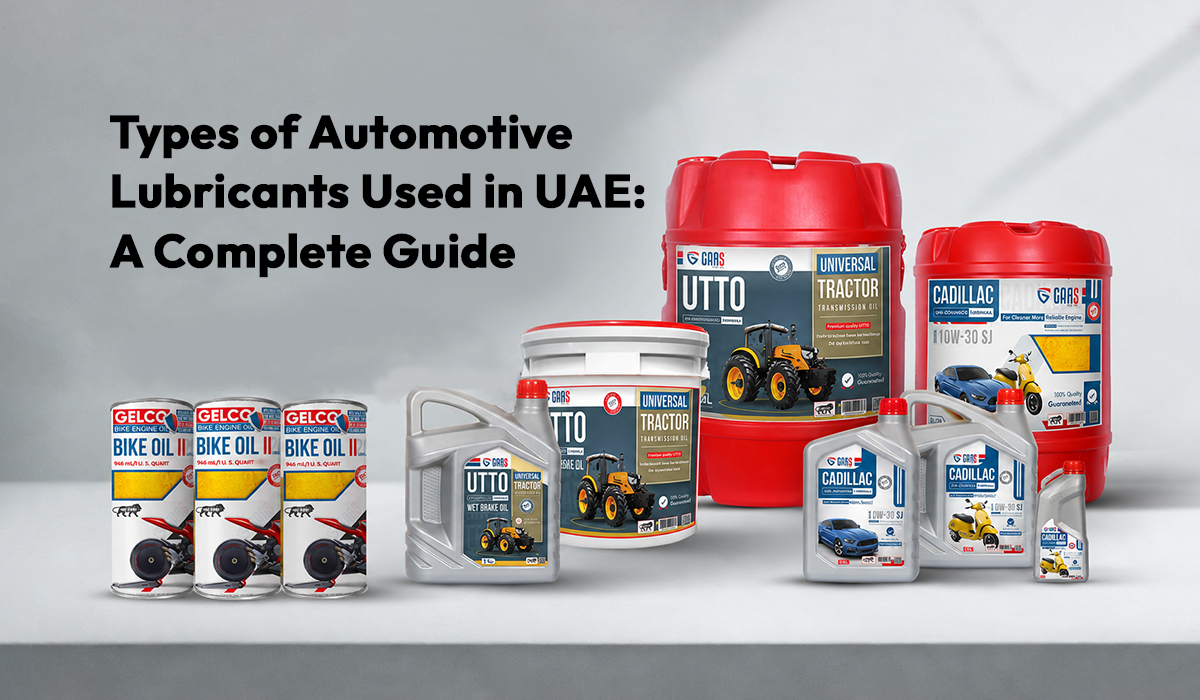
Which Types of Automotive Lubricants Does Your UAE Vehicle Actually Need?
Every vehicle on UAE roads depends on lubricants to keep its moving parts working without generating destructive friction, heat, and wear. Engine oil is the one most drivers think about - but it is one of several lubricant types that work together to keep a vehicle running reliably. In a market like the UAE where ambient temperatures regularly exceed 45°C, traffic in Dubai and Abu Dhabi puts engines under sustained thermal load, highway journeys run long, and dust exposure is constant - choosing the right types of automotive lubricants for each application matters more than it does in most other markets. This guide covers all eight main types of automotive lubricants used across UAE vehicles, how UAE conditions affect lubricant selection, and the practical steps for choosing correctly.Why Automotive Lubricants Matter - Especially in UAE Conditions
Lubricants do several jobs simultaneously inside a vehicle - and the UAE climate makes every one of those jobs harder:- Reduce friction and wear - without a lubricant film between metal surfaces, components grind against each other and wear out rapidly
- Control heat - lubricants carry heat away from components that cannot be directly cooled by the engine cooling system
- Protect against corrosion - additive packages in quality lubricants prevent moisture and combustion byproducts from attacking metal surfaces
- Remove contaminants - lubricants keep combustion byproducts and particles suspended rather than allowing them to settle as deposits
- Support longer service life - correctly specified lubricants reduce the rate at which components wear, extending the intervals between major maintenance events
Keep Your UAE Vehicle Protected with Quality Automotive Lubricants.
8 Main Types of Automotive Lubricants Used in UAE
1. Engine Oil :
Engine oil is the most widely recognised automotive lubricant - and the one that takes the most punishment in UAE conditions. It lubricates the engine's moving parts, carries heat away from critical components, keeps combustion byproducts suspended, and protects internal surfaces between oil changes. Types available : Mineral - refined from crude oil, cost-effective for older engines and standard conditions Semi-synthetic - a blend that outperforms mineral under heat without reaching full synthetic price Fully synthetic - chemically engineered for maximum heat resistance and extended service life Common viscosity grades used in UAE :| Grade | What It Indicates | Typical Application |
|---|---|---|
| 0W-20 | Low-temperature flow + operating viscosity | Modern passenger vehicles |
| 5W-30 | Broad temperature performance | Modern petrol and diesel engines |
| 5W-40 | Higher operating viscosity | Passenger and commercial applications |
| 10W-40 | Multi-grade engine oil | Certain older and modern engines |
| 15W-40 | Higher viscosity grade | Diesel and commercial applications |
2. Gear Oil :
Gear oil protects the gears inside manual transmissions, differentials, and transfer cases. It works under considerably higher pressure than engine oil - gear teeth mesh under load and generate contact pressure that standard engine oil cannot handle. Gear oil is formulated with extreme pressure additives that form a protective film under those high-contact conditions, preventing metal-to-metal wear between gear faces. Using the wrong specification - or substituting engine oil where gear oil is required - leads to accelerated gear wear that becomes expensive to repair.3. Automatic Transmission Fluid (ATF) :
ATF performs two roles simultaneously - it lubricates the transmission's mechanical components and acts as the hydraulic fluid that controls gear changes in an automatic gearbox. That dual function makes it unique among automotive lubricants. The correct ATF specification for a vehicle is non-negotiable. Different automatic transmission designs require fluids with specific friction characteristics - using the wrong ATF affects shift quality, transmission temperature, and long-term component life. In UAE conditions where automatic transmissions handle heavy traffic and sustained heat, the right fluid specification matters particularly.4. CVT Fluid :
Continuously variable transmissions use a belt and pulley system rather than fixed gear ratios - and the fluid that runs through them needs to be specifically formulated for that design. CVT fluid controls the clamping force on the belt, lubricates the pulleys, and manages heat from the continuous variation in drive ratio. Standard transmission oil - even quality ATF - should not be substituted for CVT fluid without confirming it meets the vehicle manufacturer's CVT specification. The consequences of the wrong fluid in a CVT show up as slipping, overheating, and eventually transmission failure.5. Brake Fluid :
Brake fluid is the hydraulic medium that transfers braking force from the pedal through to the brake callipers. It operates under high pressure and high temperature - particularly in UAE stop-start traffic and on vehicles descending long inclines. Brake fluid is hygroscopic - it absorbs moisture from the air over time, which lowers its boiling point. Degraded brake fluid with high moisture content can vaporise inside the brake lines under hard braking, causing brake fade or failure. DOT 3, DOT 4, and DOT 5.1 are the most common classifications - the vehicle manufacturer's specification determines which is correct.6. Grease :
Automotive grease is a lubricant that stays where it is applied - it does not flow away like oil does. That makes it the right choice for components that need sustained lubrication between service intervals: wheel bearings, CV joints, ball joints, chassis components, and steering linkages. Different grease formulations suit different applications. Lithium-based grease covers most general automotive uses. Extreme pressure grease handles high-load applications like heavy vehicle wheel bearings. High-temperature grease is specified where sustained heat exposure would cause standard grease to break down.7. Coolant and Antifreeze :
Coolant is not technically a lubricant in the conventional sense - it does not reduce friction between metal surfaces. It controls engine temperature by carrying heat from the engine block to the radiator, and it protects the cooling system's internal components from corrosion. In UAE conditions where engine operating temperatures are already elevated by ambient heat, the right coolant concentration and specification is important. A cooling system running on degraded or incorrect coolant in UAE summer temperatures risks overheating that can cause serious engine damage.8. Hydraulic Fluid :
Automotive hydraulic fluid is used in power steering systems, hydraulic braking circuits, and on some commercial vehicles in hydraulic suspension and lifting systems. It transmits force through the hydraulic circuit while lubricating the pump, valves, and actuators. Using the correct hydraulic fluid specification for the application prevents seal degradation, pump wear, and pressure loss in the hydraulic circuit. For commercial vehicles operating across UAE construction sites and logistics operations, hydraulic fluid condition directly affects operational reliability.How UAE Climate Affects Lubricant Selection
UAE conditions create a specific set of demands on automotive lubricants that standard global recommendations do not fully account for:- High Ambient Temperatures - Oil oxidises faster, grease softens, and brake fluid absorbs moisture more quickly than it would in a cooler climate. Every lubricant type degrades sooner under sustained UAE heat.
- Stop-Start City Traffic - Dubai, Abu Dhabi, and Sharjah traffic keeps engines and transmissions under sustained thermal load at low speed - exactly the condition where heat builds fastest and dissipates slowest.
- Long Highway Journeys - Sustained high-speed driving generates consistent heat output from the engine and transmission. Lubricants need to hold their protective properties through those long runs without thinning out or losing additive effectiveness.
- Dust and Contamination - Desert dust enters engines and other systems faster than in clean-air markets - shortening lubricant service life regardless of the grade running through the system.
- Thicker Oil Is Not the Answer - Viscosity grade needs to match the manufacturer's specification for the engine design and temperature range. Assuming heavier is better in UAE heat is one of the most common and costly mistakes UAE drivers make.
How to Choose the Right Automotive Lubricant in UAE
- Check your vehicle manufacturer's recommendation - the owner manual specifies the correct lubricant type and grade for every system in the vehicle
- Identify the correct lubricant type - engine oil, gear oil, ATF, CVT fluid, brake fluid, grease, coolant, or hydraulic fluid depending on the application
- Check the viscosity grade - for engine oil and gear oil, the correct grade is specified in the owner manual and takes priority over general advice
- Verify the performance specification - API, ACEA, or OEM-specific approval relevant to your vehicle and engine type
- Consider vehicle age and operating conditions - high-mileage engines and vehicles used in heavy-duty UAE applications may require specific grades or more frequent changes
- Follow recommended service intervals - and adjust shorter for UAE heat and city driving rather than pushing to the maximum
- Source from a reliable supplier - a dependable Engine Oil Supplier in UAE who maintains consistent product quality across batches is worth more than the cheapest option that varies between deliveries
Automotive Lubricants for Different Vehicle Types in UAE
Passenger Cars : Standard passenger vehicles need engine oil in the manufacturer-specified grade, transmission fluid matching the gearbox type, brake fluid to the correct DOT specification, and coolant maintained at the correct concentration. Fully synthetic engine oil is the practical choice for most modern passenger cars in UAE conditions. SUVs and 4x4 Vehicles : SUVs add differential oil and transfer case fluid to the standard passenger car requirements. Vehicles used for off-road driving in UAE desert environments put additional stress on all lubricant systems - more frequent checks and shorter intervals are appropriate. Trucks and Commercial Vehicles : Heavy-duty diesel engines require engine oils with higher load-carrying capacity and specific API certifications. Gear oils for heavy commercial transmissions and differentials are specified to handle higher torque loads. Hydraulic fluids for truck-mounted systems need to be matched to the specific hydraulic circuit requirements. Fleet Vehicles : Fleet operators benefit from standardising lubricant specifications across their vehicles where manufacturer specifications allow. Consistent lubricant specification simplifies procurement, reduces the risk of incorrect product being used, and makes maintenance scheduling more predictable.Common Mistakes When Choosing Automotive Lubricants in UAE
- Choosing on price alone - the cheapest lubricant is rarely the right one for UAE operating conditions
- Using the wrong viscosity - thicker does not mean better in UAE heat; the manufacturer specification exists for a reason
- Mixing incompatible fluids - topping up with a different grade or type dilutes the additive package of what is already in the system
- Ignoring manufacturer specifications - OEM recommendations account for the specific design of the engine or system; deviating from them creates risk
- Extending service intervals unnecessarily - UAE heat and city driving shorten the effective life of lubricants faster than odometer readings alone suggest
- Using automotive lubricants for applications they were not designed for - engine oil in a gearbox or standard ATF in a CVT both create problems that show up over time
- Sourcing from unreliable suppliers - batch inconsistency from an unreliable source creates unpredictable performance regardless of the grade on the label
How Often Should Automotive Lubricants Be Changed?
There is no single interval that applies to every vehicle, lubricant type, and operating condition. The right interval depends on:- The vehicle manufacturer's recommended service schedule
- The lubricant type - fully synthetic engine oil lasts longer than mineral; brake fluid degrades with moisture absorption regardless of mileage
- Vehicle age and engine condition - older engines with more wear consume and degrade lubricants faster
- Mileage and driving pattern - city driving in UAE traffic degrades oil faster per kilometre than highway driving
- Operating conditions - heavy loads, towing, and sustained high temperatures all shorten lubricant service life
Why Choosing the Right Automotive Lubricant Supplier in UAE Matters
The lubricant specification is only as good as the product that actually arrives. A supplier who maintains consistent quality across every batch, stocks the full range of lubricant types your vehicles require, and provides technical guidance on grade selection for UAE conditions delivers something that a price-led supplier rarely does. GARS Lubricants supplies automotive lubricants across the UAE - engine oils, gear oils, transmission fluids, greases, brake fluids, coolants, and hydraulic fluids covering passenger vehicles, commercial fleets, and industrial applications. Products are quality-checked at every production stage before reaching UAE clients. For full product details, visit garslubricants.com or contact the GARS team directly.Conclusion
The types of automotive lubricants used in UAE vehicles cover a broader range than most drivers and fleet managers think about day to day - engine oil, gear oil, transmission fluids, brake fluid, grease, coolant, and hydraulic fluid each perform specific functions that the others cannot substitute for. UAE heat, traffic conditions, and dust exposure make correct lubricant selection more important here than in most other markets. The answer is not choosing the thickest oil available - it is matching the right specification to the right application, sourcing it from a supplier who maintains consistent quality, and changing it before it runs out of road. For automotive lubricant supply across the full range of vehicle types and applications in UAE, contact GARS Lubricants at garslubricants.com.FAQ's
What are the main types of automotive lubricants?
Engine oil, gear oil, automatic transmission fluid, CVT fluid, brake fluid, grease, coolant, and hydraulic fluid - each formulated for a specific application and not interchangeable without checking manufacturer specifications.Which engine oil suits UAE's hot climate best?
Fully synthetic engine oil in the grade specified by your vehicle manufacturer - typically 5W30 or 5W40 for most modern UAE passenger vehicles. Synthetic formulations handle UAE heat, sustained driving, and stop-start traffic better than mineral or semi-synthetic grades.What is the difference between engine oil and gear oil?
Engine oil lubricates the internal components of a combustion engine - it flows freely and handles high-temperature combustion byproducts. Gear oil handles the extreme contact pressure between meshing gear teeth in transmissions and differentials - it uses different additives and viscosity characteristics than engine oil and cannot be substituted for it.Can the same lubricant be used for every vehicle?
No. Different vehicles, engines, and transmission types require lubricants with specific viscosity grades and performance specifications. Using the wrong lubricant - even a high-quality one - in an application it was not designed for creates problems that accumulate over time.How do I choose the right engine oil grade in UAE?
Open the owner manual first - that grade recommendation was written around your specific engine, not a general estimate. For most modern vehicles in the UAE, a fully synthetic 5W30 or 5W40 with the correct API certification is where that recommendation typically lands.How does UAE heat affect engine oil performance?
Heat breaks oil down faster than anything else - oxidation speeds up, viscosity drops at running temperature, and the additive package wears out sooner than it would in a cooler climate. An oil that holds up comfortably elsewhere may not last the same distance through a UAE summer, especially in city traffic.How often should automotive lubricants be changed in UAE?
No single answer covers every vehicle and lubricant type. Use your manufacturer's schedule as the starting point, lean toward the shorter end in UAE heat and urban driving, and check the actual condition of the fluid between services rather than waiting for the mileage to tick over.Where can businesses source automotive lubricants in UAE?
Through a manufacturer or Engine Oil Supplier in UAE who holds consistent quality across repeat orders and stocks the full range you need. GARS Lubricants supplies workshops, fleets, and businesses directly across the UAE - reach the team at garslubricants.com.Recent Post
Top Categories
Popular Products