
Engine Oil Supplier in Afghanistan: A Guide for Importers and Distributors
Sep 29, 2026
Engine Oil Supplier in Afghanistan: A Guide for Importers and Distributors
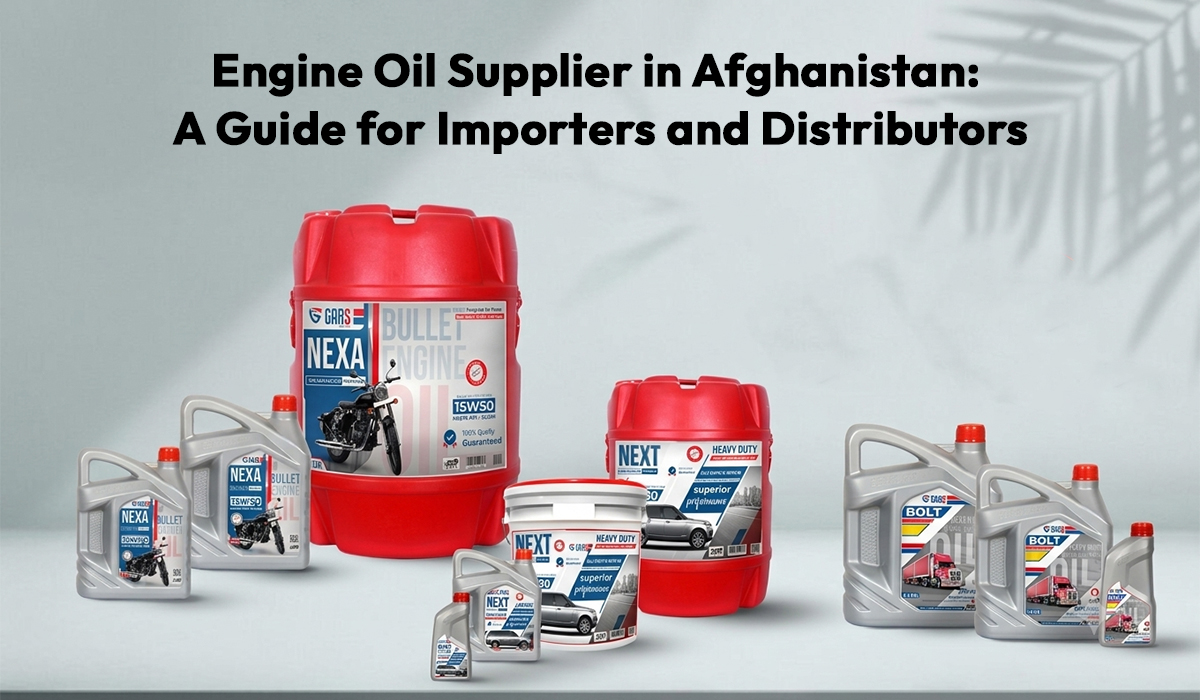
Engine Oil Supplier in Afghanistan: What Importers and Distributors Should Know Before Choosing
Afghanistan's automotive, transport, and commercial sectors run on engine oil - and the businesses that supply it carry a responsibility that goes beyond simply moving product. Workshops depend on consistent stock. Fleet operators depend on the right grade arriving when they need it. Retailers depend on a distributor who does not run dry at inconvenient moments. The search for a reliable engine oil supplier in Afghanistan looks straightforward on the surface - it rarely is once the details come into play. International supply involves more variables than domestic sourcing - manufacturer credibility, product consistency across batches, export documentation, packaging suitability, and the supplier's ability to fulfil repeat orders without gaps. Getting those factors right from the beginning saves considerably more trouble than correcting them after a supply relationship has already started. This guide covers the key considerations for Afghan importers and distributors evaluating engine oil supply options - from product range and quality standards through to bulk supply capability and long-term partnership requirements.What Should Importers Look for in an Engine Oil Supplier in Afghanistan?
Not every international engine oil supplier is equipped to support a serious distribution operation in Afghanistan. The ones worth working with share a recognisable set of characteristics - and checking for them before the first order is considerably easier than discovering their absence after it. Product Quality and Consistency : The engine oil that arrives on the fifth delivery needs to perform the same way it did on the first. Batch-to-batch consistency depends on manufacturing process discipline - automated blending, controlled raw material intake, and in-house quality testing at multiple production stages. Ask specifically how quality is managed across batches, not just whether a quality process exists. Range of Engine Oil Grades : Afghanistan's vehicle population spans passenger cars, motorcycles, commercial trucks, agricultural machinery, and heavy-duty diesel vehicles - each with different oil grade requirements. A supplier who covers that range from a single manufacturing source simplifies procurement, reduces the number of supply relationships to manage, and keeps quality consistent across product categories. Manufacturing Capabilities : There is a meaningful difference between a manufacturer and a trading company. A manufacturer controls the production process - base oil sourcing, formulation, blending, testing, and packaging. A trading company sources finished product from others and resells it. Quality control only exists at the point of production, which is why sourcing from a direct manufacturer matters for importers who need consistent product across repeat orders. Packaging Options : Afghan distributors serve a mixed customer base - retail outlets, workshops, fleet operators, and bulk buyers all have different packaging requirements. A supplier who offers multiple pack sizes from small retail bottles through to large drum formats gives distributors the flexibility to serve that range without sourcing from multiple suppliers. Bulk Supply Capacity : Production capacity determines whether a supplier can grow with your business. A manufacturer with limited capacity manages demand when it increases - which means supply gaps at exactly the moments when your distribution business is doing well. Confirm actual production capacity against your projected order volumes before committing. Export Experience : International supply involves documentation, customs requirements, and logistics coordination that domestic supply does not. A supplier with real export experience handles those elements as a standard part of the process rather than something that needs to be figured out on each shipment. Documentation and Technical Support : API certifications, viscosity grade specs, safety data sheets, technical product documentation - Afghan importers need all of this to stand behind what they're selling to their customers. A supplier who sends this paperwork over without being prompted is telling you something useful about how seriously their products have been tested. One who needs to be chased for it is telling you something different. Consistent Availability : The first order going smoothly doesn't tell you much. A lot of suppliers manage that part well. What separates a reliable supply partner from a risky one is what happens on the third order, the sixth, and the one that arrives during a busy period when three other clients want product at the same time. Before committing to a supplier, it's worth asking directly about stock levels, typical lead times on repeat orders, and how they handle demand when it spikes.Choose an Engine Oil Supplier With the Right Product Range
An Afghan distributor serving a mixed automotive and commercial market cannot build a sustainable business on a supplier with a narrow product catalogue. Different vehicles, different engines, and different operating conditions all create demand for different engine oil grades - and the ability to source all of them from a single reliable supplier is a genuine operational advantage. Passenger Vehicles : Modern passenger cars in Afghanistan span a wide range of makes, models, and engine specifications - requiring engine oils across multiple viscosity grades and API certifications. A supplier covering 5W-30, 10W-40, and 20W-50 grades for petrol passenger car applications gives distributors the range their workshop and retail customers need. Trucks and Commercial Vehicles : Afghanistan's transport sector runs on trucks and commercial vehicles that cover demanding routes under heavy loads. Heavy-duty diesel engine oils with appropriate API diesel certifications are a core requirement for any distributor serving this segment - and the grades need to be available in bulk packaging formats suited to fleet maintenance operations. Heavy-Duty Diesel Engines : Large diesel engines in trucks, buses, and heavy commercial vehicles require engine oils with higher load-carrying capacity, stronger soot management, and longer service life than standard passenger vehicle grades. API CK-4 or equivalent certification confirms the oil was tested against the performance standards these applications require. Industrial Applications : Beyond automotive, Afghanistan's industrial and agricultural sectors create demand for engine oils suited to machinery, generators, and equipment that operates outside standard vehicle applications. A supplier who covers these requirements gives distributors additional market reach. Different Viscosity Grades : From lighter grades like 5W-30 for modern passenger vehicles through to heavier grades like 20W-50 for older engines and specific commercial applications - the right supplier covers the full viscosity range rather than a narrow selection. For more on sourcing engine oil directly from a manufacturing partner in India, see our page on engine oil manufacturer in Afghanistan which covers the manufacturing process, product range, and export arrangements in detail.Why Product Quality Matters for Afghan Importers and Distributors
Product quality is not just a technical consideration - it is a business reputation consideration. Distributors who supply poor quality or inconsistent engine oil to workshops and retailers carry the consequences of that quality in their customer relationships, not the manufacturer who produced it. Consistent Formulation : Engine oil that varies between batches creates unpredictable outcomes in customer engines. A batch that performs well sets an expectation the next delivery needs to meet. Consistent formulation depends on controlled manufacturing - automated blending, verified raw material intake, and in-house testing that runs on every production batch rather than periodically. Engine Protection : The fundamental purpose of engine oil is to protect the engine - maintaining a lubricant film between moving metal surfaces under heat and load. Oil that falls short of its claimed API specification does not provide the protection the label promises. For Afghan distributors, sourcing from a manufacturer who can demonstrate API certification rather than simply claim it protects both the end customer's engine and the distributor's reputation. Wear Protection : Engine wear accumulates gradually and invisibly - the customer does not feel it happening until a component fails ahead of schedule. Quality engine oil with effective anti-wear additive packages slows that accumulation significantly. Distributors who supply consistently quality-tested oil earn customer loyalty that distributors supplying cheaper alternatives eventually lose. Performance Across Operating Conditions : Afghanistan's vehicle fleet operates across a wide range of conditions - from urban driving to long-distance highway routes, from lighter passenger vehicles to heavy commercial trucks. Engine oil that performs consistently across those conditions requires formulation depth that comes from established manufacturers with real R&D capability, not basic blending operations. Purchasing from an Established Manufacturer : The difference between an established manufacturer and an unknown supplier is not always visible on the product label. It shows up in the quality control documentation, the API certification records, the batch test reports, and the consistency of what arrives on the third and fourth delivery. Afghan importers who invest time in verifying manufacturer credentials before the first order avoid the more expensive process of switching suppliers after a quality problem has already damaged customer relationships.Bulk Engine Oil Supply: What Importers Should Consider
Bulk supply is where the economics of engine oil distribution actually work - and where the supplier's real capabilities either support or undermine the distributor's business model. Required Order Quantity : Understanding your monthly and annual demand before approaching a supplier gives you the basis for a productive conversation about pricing, minimum order quantities, and production scheduling. Suppliers who know your volume requirements upfront can give you more accurate lead times and more relevant pricing. Packaging Sizes : Bulk supply does not mean one packaging format. Afghan distributors typically need a combination of retail pack sizes for workshop and retail customers alongside drum formats for fleet and industrial buyers. A supplier who offers flexibility across packaging formats - from 1-litre bottles through to 210-litre drums - serves the full distribution chain rather than just one segment of it. Bulk vs Packaged Products : Some distributors buy in bulk drums and handle the repackaging themselves locally. Others prefer to bring in product that's already in retail-ready formats - bottles, packs, workshop-ready units - straight off the shelf. Neither approach is universally better. It comes down to what your local setup can handle, what your customers actually buy, and which option works out better economically when you run the numbers. Worth having that conversation with any potential supplier before settling on one format just because it's what you've done before. Regular vs One-Time Orders : There's a meaningful difference between a supplier who wants to move a container and one who wants to be part of how your business runs month after month. The second type tends to keep stock of your specific grades, learns your ordering pattern over time, and doesn't push your order to the back when things get tight on their end. Before going too far down the road with any supplier, find out early whether their model is built around repeat accounts or whether they're primarily interested in large one-off transactions. Stock Availability and Production Capacity : Ask specifically whether your required grades are in regular production or made to order. Regular production grades are available faster and with more predictable lead times. Made-to-order grades require production scheduling that adds time between order and delivery - which matters when your distribution customers expect consistent availability. Delivery Planning : International supply involves lead times that domestic sourcing does not. Building those lead times into your inventory planning - and understanding what happens when shipments are delayed - is part of running a distribution operation on imported supply. A supplier who communicates proactively about production and dispatch status makes that planning considerably easier.Packaging Options for Engine Oil Distributors
Packaging is not just a container decision - it affects how your product is perceived by retail customers, how workshops and fleets receive it, and whether your distribution operation can serve the full range of buyers in your market. Different Pack Sizes for Different Customers : A retail outlet serving individual car owners needs small pack sizes - 1-litre and 4-litre formats that consumers can purchase for a single oil change. A workshop serving multiple vehicles needs larger formats that reduce the handling involved in multiple small pack purchases. A fleet operator needs drum supply that keeps maintenance operations running without constant reordering. The right supplier covers all of these formats rather than forcing distributors to standardise on one. Retail vs Workshop Requirements : Retail packaging prioritises label presentation and consumer convenience. Workshop packaging prioritises volume efficiency and ease of pouring. Both have a place in a distribution network - and a supplier who understands those different requirements can advise on the right formats for different customer segments. Product Labelling : Accurate, complete labelling - including viscosity grade, API certification, application information, and manufacturer details - gives distributors credible product to present to their customers. Labelling that is unclear or incomplete creates questions at the point of sale that undermine customer confidence. Private Label Possibilities : For distributors looking to build their own brand in the Afghan market, working with a manufacturer who offers private label manufacturing creates a differentiated product offering that generic supply cannot match. Custom formulations, branded packaging, and full technical documentation - the distributor builds the market presence while the manufacturer handles the production.Working With an Indian Engine Oil Manufacturer for Afghanistan Supply
India is one of the most established lubricant manufacturing markets in Asia - with a concentration of manufacturers in Gujarat who supply both domestic markets and international export buyers across the Middle East, South Asia, and beyond. For Afghan importers and distributors, working with an Indian engine oil manufacturer offers several practical advantages:- Geographic Proximity - Shorter shipping distance compared to European or American manufacturers makes regular bulk supply more economically practical for Afghan distribution operations.
- Manufacturing Experience - Decades of lubricant manufacturing experience in India - API certifications, ISO quality management, and formulation depth that covers the full grade range Afghan distributors need.
- Export Capability - Documented international shipment processes, customs documentation, and logistics coordination - the export infrastructure Afghan importers need from a supply partner.
- Product Range - Passenger vehicles, motorcycles, diesel engines, and commercial vehicles across multiple viscosity grades - matching the diverse requirements of Afghanistan's vehicle market from a single manufacturing source.
How to Choose the Right Engine Oil Supplier for Your Business
A structured evaluation process saves the time and cost of discovering a supplier's limitations after the supply relationship is already established: Step 1 - Define Your Required Engine Oil Products List the grades, API certifications, and application categories your customer base requires. Passenger car grades, motorcycle oils, heavy-duty diesel grades - document what your market needs before approaching any supplier. Step 2 - Estimate Monthly and Annual Demand Calculate realistic volume requirements across your product range. This gives suppliers the information they need to give you accurate pricing and production scheduling - and gives you the basis for comparing supplier capacity against your actual requirements. Step 3 - Compare Supplier Capabilities Measure each manufacturer against the same criteria - product range, documentation, production capacity, export track record, packaging options. It's easy to get pulled in by sharp pricing or a confident sales approach. A checklist keeps the important things on the table regardless. Step 4 - Check Product and Technical Information Request API certification documentation, batch test reports, and product technical data sheets for the grades you intend to source. A manufacturer who produces this documentation readily is one whose quality claims are backed by actual testing. Step 5 - Discuss Packaging and Order Quantities Confirm available pack sizes, minimum order quantities, and lead times for your required grades. Ensure the supplier can serve your full customer range - retail, workshop, and bulk - from the same supply relationship. Step 6 - Confirm Export and Delivery Requirements Understand exactly what documentation the supplier provides for international shipment, what the standard lead time is from order confirmation to dispatch, and how the supplier communicates about production and shipping status. Step 7 - Establish a Long-Term Supply Arrangement A supplier who understands your business as a long-term relationship rather than a series of individual transactions invests in your success - maintaining stock for your grades, prioritising your orders, and staying available for technical and operational queries after the first delivery.Why Reliable Supply Matters for Distributors in Afghanistan
Supply reliability is the foundation of a distribution business - and it is the factor that customers notice most when it fails. Maintaining Inventory : Distribution businesses that cannot maintain consistent stock across their product range lose customers to competitors who can. The engine oil grades your workshops and retailers depend on need to be available when they need them - which means your supplier's reliability directly determines your own reliability to your customers. Meeting Customer Demand : Workshop customers who cannot get the grade they need from their usual distributor find another one. That customer relationship, once lost to a competitor over a stock gap, is difficult to rebuild. Consistent supply from a reliable international manufacturer is what keeps that from happening. Avoiding Unexpected Shortages : Supply gaps in international sourcing come from two sources - your own inventory management and your supplier's production and shipping reliability. You control the first. The second depends entirely on your supplier. A manufacturer who communicates proactively about production schedules and potential delays gives you the information you need to manage your inventory before a shortage becomes a customer problem. Supporting Workshops and Retailers : Workshops and retailers who stock your engine oil build their customer recommendations around product availability. When you supply consistently, they recommend your products confidently. When you run short, their confidence in your supply chain transfers to doubt about your brand - and that doubt is hard to reverse. Building a Dependable Distribution Network : A distribution network built on consistent supply from a reliable manufacturer compounds its own value over time. Each workshop, retailer, and fleet customer who depends on your supply becomes harder for a competitor to dislodge when your reliability is consistent. The supply relationship you build with your manufacturer is the foundation of the distribution network you build in your market.Conclusion - Find the Right Engine Oil Supply Partner for Afghanistan
Choosing the right engine oil supplier in Afghanistan is a decision that runs through every part of a distribution business - product quality, stock availability, customer satisfaction, and the reliability of the supply chain that everything else depends on. The key factors are straightforward: consistent product quality across batches, a range that covers your full market requirements, production capacity that matches your volume, packaging options that serve your customer base, and export experience that makes international supply predictable rather than complicated. For Afghan importers and distributors looking for a direct manufacturing supply relationship with an established Indian engine oil manufacturer, GARS Lubricants is set up to discuss your requirements, confirm suitable grades and packaging, and establish a supply arrangement that supports your distribution operation long term. Contact our export team today to discuss your engine oil requirements for Afghanistan.FAQ
Q1: What should I consider when choosing an engine oil supplier in Afghanistan? A: Product quality consistency, the range of grades available, the manufacturer's production capacity, export experience, packaging options, and documentation support are the key factors. Verifying these before the first order is considerably easier than discovering their absence after a supply relationship has started. Q2: Can engine oil be supplied in bulk to Afghanistan? A: Yes - established Indian manufacturers supply bulk engine oil to international markets including Afghanistan in drum formats from 20 litres through to 210 litres. Minimum order quantities and packaging formats are discussed directly based on product type and destination. Q3: What engine oil grades are available for importers and distributors? A: Grades covering passenger vehicles, motorcycles, diesel engines, and commercial vehicles - from lighter grades like 5W-30 through to heavier grades like 20W-50 - are available from established Indian manufacturers. The specific grades available depend on the manufacturer's product range and production schedule. Q4: Can an engine oil manufacturer support long-term distributor requirements? A: Established manufacturers with sufficient production capacity and export infrastructure can support long-term distributor requirements - including regular bulk orders, consistent packaging formats, and technical support for grade selection. The key is confirming production capacity and supply reliability before committing to a long-term arrangement rather than after.Recent Post
Top Categories
Popular Products