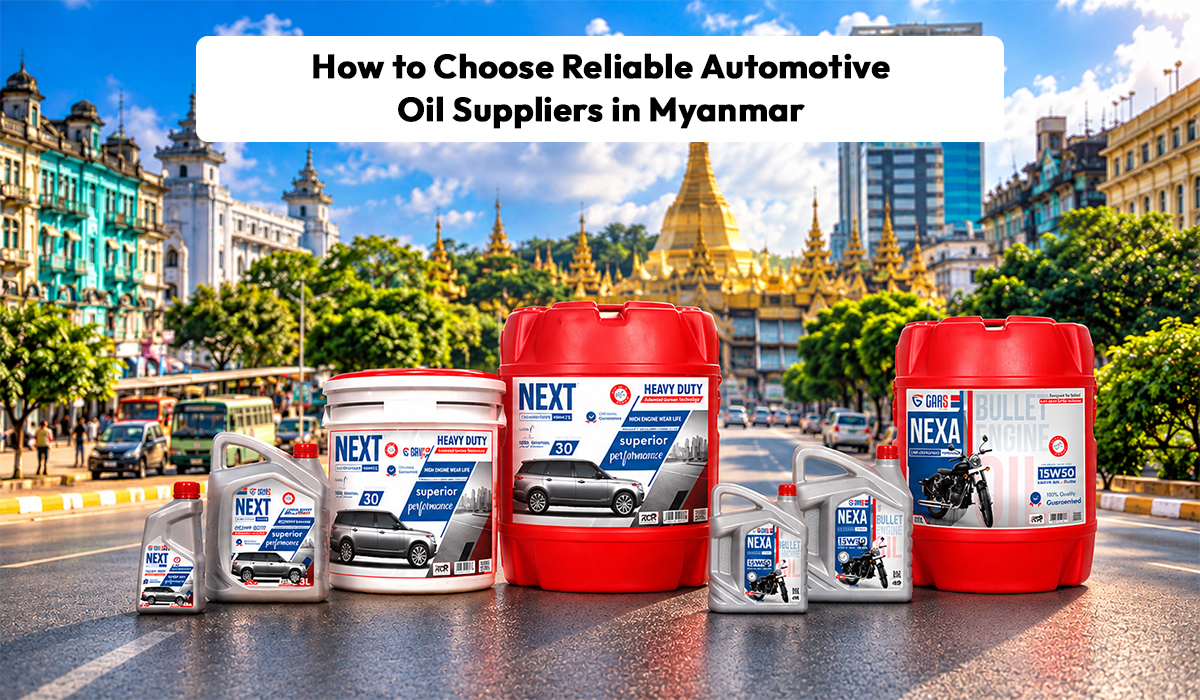
How to Choose Reliable Automotive Oil Suppliers in Myanmar
Nov 04, 2026
How to Choose Reliable Automotive Oil Suppliers in Myanmar
Before You Pick Automotive Oil Suppliers in Myanmar, Check These Eight Things
If your business depends on regular lubricant supply, the choice of automotive oil suppliers will affect you for a long time. A workshop chain, a fleet, an importer and a distributor all need the same basic thing: oil that arrives when promised and performs the same way every time. Price is the obvious place to start, and it shouldn’t be the only place. A cheap quote tells you nothing about batch quality, stock levels, paperwork or what happens when you reorder. This guide covers what Myanmar businesses should compare before settling on an automotive lubricant supplier in Myanmar, so the weak points show up before the first shipment.Why the Right Supplier Matters
Most of what a supplier does for you happens in the background. The grade you need is on the shelf. This month’s oil behaves like last month’s. You can sell a customer the right oil for their car, bike or truck without phoning three different companies. And when you buy in volume, the cost per litre actually comes down. The cheapest quote tends to hurt later, not straight away. Batches start to differ, a popular grade runs out, or the paperwork doesn’t match what customs wants to see. Nobody mentions any of this when quoting. You find out a few months in, once you’ve already built your business around that supplier.Need a reliable automotive oil supplier in Myanmar?
8 Things to Check When Choosing Automotive Oil Suppliers in Myanmar
1. Product Quality and Specifications What makes a reliable automotive oil supplier? One whose oil meets its stated specification on every batch, and who can show you the paperwork to prove it. Check the viscosity grades, the performance specifications (such as API ratings), and what the oil is meant for. Then ask what testing each batch goes through before it ships. A supplier who answers with documents is easy to trust. One who answers with adjectives isn’t. 2. Range of Automotive Oils Your customers don’t all drive the same thing. A distributor serving a mixed market may need oils for:- Passenger cars
- Motorcycles
- Commercial vehicles
- Heavy-duty diesel engines
- Gear and transmission systems
- Greases and other automotive lubricants
- Technical Data Sheets (TDS)
- Safety Data Sheets (SDS)
- Product specifications and viscosity details
- Application recommendations
- Quality and certification documents
How to Compare Automotive Oil Suppliers in Myanmar
| Factor | What to Check |
|---|---|
| Product Quality | Specifications and quality-control practices |
| Product Range | Products for different vehicle applications |
| Manufacturing | Production capacity and consistency |
| MOQ | Suitable for your business volume |
| Packaging | Retail, commercial or bulk options |
| Documentation | TDS, SDS and specifications |
| Export | International supply experience |
| Delivery | Lead time and shipment coordination |
| Support | Technical and business assistance |
| Reliability | Ability to handle repeat orders |
Automotive Oil Supplier vs Automotive Oil Distributor
A supplier may manufacture the oil, export it, or sell it directly to businesses. A distributor usually buys from a manufacturer or supplier and sells within a particular market or territory. Which one suits you depends on your order volume, location, product needs and how your business is set up. A large importer buying in volume may prefer to deal with a manufacturer directly. A smaller business serving a local area may find a distributor easier.Why Work With an Established Automotive Lubricant Manufacturer?
A manufacturer blends, tests and packs the oil itself, so there is nobody to pass the blame to if something is off. You usually get more consistent batches, a fuller range from one place, bulk orders without a middleman, and a direct contact who can explain the product. Companies that export every month also tend to get the shipping paperwork right. We have set out what that looks like on our engine oil manufacturer in Myanmar page.Why Choose GARS Lubricants for Myanmar?
GARS Lubricants has manufactured lubricants since 1990 at its facility in Surat, Gujarat, India. For Myanmar buyers, the main points are:- ISO 9001:2015 certified manufacturing, with in-house testing of each batch
- A wide range of automotive lubricants, including engine oils
- Bulk supply and a range of pack sizes
- Export experience, with shipments handled since 2018
- TDS and SDS documents for products
- Private-label manufacturing for businesses building their own brand
- Support for importers and distributors
Looking for a reliable automotive oil supplier for your business in Myanmar?
Conclusion
One quote doesn’t tell you much about automotive oil suppliers. The first order almost always goes fine. It’s the fourth one that shows you something, when you’re running low and they either come through or make excuses. So ask each supplier the awkward questions up front. Who makes the oil? What’s the minimum order? How many export shipments have they done? What happens when one is late? Then go with whoever answers most clearly. If you’d like to talk through quantities, GARS Lubricants can help with products, volumes and export arrangements.FAQ's
How do I verify the quality of automotive oil from a supplier?
Ask for the TDS, SDS and API certification for each product, and find out how each batch is tested. A supplier with real quality control will have documents ready. Ordering a small trial batch first is also sensible.What should I consider when buying automotive oil in bulk?
Look at the minimum order, pack sizes, lead times, your storage space, and the total cost including freight and customs, not just the price per litre.Can automotive oil suppliers provide different grades for different vehicles?
A good one can. Confirm which grades are in regular production and which are made to order, since that affects lead times.What documents should I request from an automotive oil supplier?
Technical Data Sheets, Safety Data Sheets, product specifications, viscosity information and quality certifications. For exports, also ask which shipping documents are included.Is it better to buy automotive oil directly from a manufacturer?
If you’re reordering regularly, I’d say yes. When something’s wrong with a batch, you’re talking to the people who blended it. Bulk prices are usually better too.A one-off small order is different. A local distributor will probably save you the effort.Can a Myanmar business import lubricants from overseas suppliers?
Yes, lots of importers do. Just make sure the supplier has shipped overseas before, because they’ll know which papers customs wants. Get the minimum order, pack sizes, delivery time and documents in writing before you pay anything.Recent Post
Top Categories
Popular Products