
Best Lubricants for Commercial Vehicles in UAE
Sep 11, 2026
Best Lubricants for Commercial Vehicles in UAE
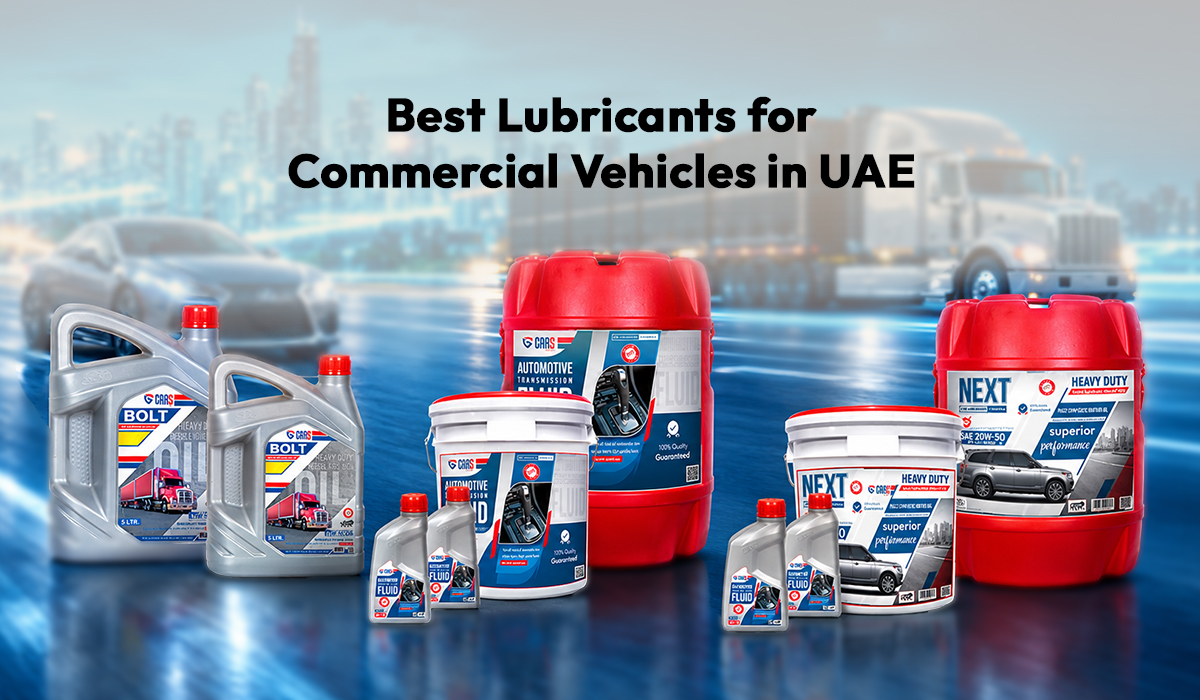
Lubricants for Commercial Vehicles in UAE - What Every Fleet Operator Needs to Get Right
Commercial vehicles in the UAE do not get an easy run. Trucks covering the Abu Dhabi to Dubai corridor in summer heat. Delivery fleets working through stop-start city traffic in Sharjah and Dubai. Construction vehicles operating on dusty sites under sustained load. Refrigerated transport running continuously to maintain cold chain integrity across long routes. These are not conditions that passenger car lubricant decisions were designed around. Lubricants for commercial vehicles in UAE need to handle heavier loads, longer operating hours, higher engine temperatures, and more demanding environments than most standard recommendations account for. Getting lubricant selection right for a commercial fleet is not just a maintenance decision - it is a direct factor in vehicle reliability, operating costs, and the frequency of unplanned breakdowns that take vehicles off the road at the worst possible moment.Why Commercial Vehicles in UAE Need the Right Lubricants
A commercial truck operating 12 to 16 hours a day under load in UAE summer conditions is a fundamentally different challenge from a passenger car doing a daily commute. The engine runs longer, the operating temperatures stay higher for more of the day, loads are heavier, and the consequences of a breakdown - delayed freight, failed deliveries, repair costs - are immediate and measurable. Key challenges that make lubricant selection critical for UAE commercial fleets:- Heavy loads - constant load on engines, transmissions, and differentials accelerates wear on components that depend on lubricant film for protection
- High engine operating hours - commercial engines run far more hours per year than passenger vehicles, compressing wear into shorter timelines
- Extreme UAE temperatures - ambient temperatures that regularly exceed 45°C in summer push engine operating temperatures higher and accelerate oil degradation
- Dust and sand exposure - UAE desert environments introduce abrasive contamination into engines and systems faster than clean-air markets
- Stop-start city driving - delivery vehicles in Dubai and Sharjah face repeated acceleration and braking cycles that generate heat and stress transmission and braking systems
- Continuous fleet operations - vehicles that do not get rest between shifts need lubricants that hold their protective properties through extended operating periods
Need Reliable Lubricants For Your UAE Fleet Vehicles?
Why Commercial Vehicles in UAE Need the Right Lubricants
Trucks Heavy-duty diesel trucks operating under high torque and load across UAE highways need engine oils, gear oils, and greases specified for the demands those conditions place on drivetrain components. Long-distance routes between Emirates add sustained operating hours to the already demanding load environment. Buses City and intercity buses face continuous operation with frequent stop-start cycles that keep engines working through repeated heat build-up and cool-down sequences. Transmission and braking systems take additional stress from the frequency of stops across busy UAE routes. Delivery Vehicles High daily mileage, city traffic, frequent engine starts, and constant loading and unloading make delivery vehicles some of the most demanding lubricant applications in any fleet. Engine oil that holds its properties through multiple short trips without ever fully warming up is a specific challenge for urban delivery operations. Construction Vehicles Excavators, loaders, dump trucks, and cranes operating on UAE construction sites face heavy loads, dusty environments, and hydraulic systems that work continuously under high pressure. Multiple lubricant types - engine oil, gear oil, grease, and hydraulic fluid - all need to be correctly specified for the application. Refrigerated Transport Vehicles Cold chain vehicles run their engines and refrigeration units simultaneously - placing additional demands on the electrical and mechanical systems that lubricants need to protect. Continuous operation means less rest time between services and higher accumulated wear rates. Fleet Vehicles Managing lubricant specifications across a mixed fleet of vehicles is a procurement and maintenance challenge in itself. Standardising where manufacturer specifications allow, and tracking where they differ, is central to running a fleet lubricant program that reduces rather than creates problems.7 Essential Lubricants for Commercial Vehicles in UAE
1. Heavy-Duty Diesel Engine Oil :
Engine oil is the lubricant that carries the most weight in any commercial vehicle maintenance program - literally and practically. Heavy-duty diesel engines generate more combustion byproducts than petrol engines, operate under higher loads, and run for more hours per day than most passenger vehicle engines ever do. The right heavy-duty diesel engine oil needs to handle soot management, deposit control, wear protection under high load, and thermal stability through sustained UAE summer operating temperatures. API specifications - CK-4 or FA-4 for modern diesel engines - confirm the oil was tested against the performance standards heavy-duty applications require. Viscosity grade selection should always match the vehicle manufacturer's recommendation. A higher viscosity oil is not automatically better for UAE heat - the correct grade is the one the engine was designed around, not the thickest option available. For a deeper look at engine oil selection for UAE conditions, our guide on best engine oil for cars in UAE covers viscosity, grade selection, and the common mistakes that cost vehicle owners money.2. Gear Oil for Commercial Vehicles :
Commercial trucks, buses, and heavy equipment use gear oil in their manual transmissions, differentials, and gearboxes - components that operate under significantly higher contact pressure than equivalent passenger vehicle systems. Gear oil for commercial applications needs extreme pressure additives that form a protective film under those high-contact conditions, preventing metal-to-metal wear between gear faces during heavy load operation. The right gear oil grade and specification reduces operating temperature in the transmission, extends component life, and keeps shifting smooth through the operating hours a commercial vehicle accumulates. Always match gear oil to the vehicle manufacturer's specified grade and API GL specification - not to a general commercial vehicle recommendation.3. Transmission Fluid :
Commercial vehicles with automatic transmissions need transmission fluid that both lubricates mechanical components and functions as the hydraulic medium for gear changes. That dual role makes specification compliance particularly important - the wrong transmission fluid affects shift quality, transmission operating temperature, and long-term component life in ways that show up over time rather than immediately. For manual transmission commercial vehicles, the correct gear oil specification covers the transmission lubrication requirement. For automatic systems, the vehicle-specific ATF specification takes priority over generic commercial vehicle recommendations.4. Hydraulic Oil for Commercial and Construction Vehicles :
Dump trucks, cranes, loaders, and construction equipment all depend on hydraulic systems for their working functions - and those systems operate under high pressure and sustained load in UAE heat that puts real stress on hydraulic fluid. Hydraulic oil in commercial applications needs to maintain consistent viscosity under operating temperature, resist oxidation over service intervals, protect pumps and valves from wear under high pressure, and prevent corrosion in the hydraulic circuit. In UAE construction environments where ambient temperatures are already high and equipment runs for long daily shifts, hydraulic oil quality directly affects system reliability and component life. For full details on hydraulic oil selection for UAE commercial and construction applications, see our dedicated UAE hydraulic oil resources.5. Grease for Commercial Vehicles :
Wheel bearings, CV joints, chassis components, fifth wheel couplings, and the numerous pivot and articulation points on heavy commercial vehicles all need grease that stays in place and keeps protecting through the conditions UAE operations create. Standard grease that performs adequately in mild conditions can soften and migrate under UAE summer heat - leaving components inadequately lubricated between service intervals. High-temperature stable grease with good adhesion and water resistance is the practical specification for UAE commercial fleet applications. Construction vehicles add the challenge of abrasive contamination from dust and sand that works its way into bearing housings and accelerates wear. Grease that forms a durable barrier against that contamination extends component life in exactly the environments where replacements are most difficult and most expensive.6. Coolant for Commercial Vehicle Engines :
Coolant is not a lubricant in the traditional sense - it does not reduce friction between moving parts. It is included here because no commercial fleet lubricant program is complete without it, and because its role in protecting the engine from overheating and internal corrosion is directly relevant to UAE operating conditions. Commercial diesel engines generate more heat than petrol engines at equivalent power output. Combined with UAE ambient temperatures in summer, a cooling system running on degraded or incorrectly specified coolant faces conditions where overheating risk is real and the consequences for the engine are severe. Engine oil and coolant perform different and complementary functions - both need to be correctly specified and maintained on schedule.7. Brake Fluid for Commercial Vehicles :
Commercial vehicles - particularly heavy trucks and buses - put more thermal and mechanical stress on their braking systems than passenger vehicles. More mass requires more braking force, and that force generates more heat in the braking circuit. Brake fluid to the correct DOT specification for the vehicle, maintained at the correct level, and changed on the manufacturer's recommended schedule keeps the hydraulic braking system functioning reliably under the demands commercial operation places on it. In UAE conditions where sustained highway driving and city stop-start both contribute brake heat, the correct specification and regular inspection are non-negotiable.How UAE Climate Affects Commercial Vehicle Lubricants
- Extreme Temperatures - High ambient temperatures push engine and transmission operating temperatures higher than the same vehicle would reach in a cooler market. Oil oxidises faster, viscosity stability comes under more pressure, and the additives that provide wear and deposit protection deplete sooner. For commercial fleets, that means service intervals need to reflect actual operating conditions rather than simply the calendar.
- Dust and Sand - UAE desert environments introduce abrasive particles into engines, air filters, and other systems at rates that clean-air markets do not face. Contaminated oil that has picked up abrasive particles circulates wear through the engine rather than protecting against it. Oil filter condition and change intervals matter more in dusty environments than most fleet maintenance schedules acknowledge.
- Long-Distance Fleet Operations - Trucks covering routes between Dubai, Abu Dhabi, Al Ain, and further afield accumulate operating hours rapidly under sustained load and heat. The oil running through those engines faces sustained thermal and mechanical stress for hours at a time - conditions that deplete additive packages faster than shorter mixed-cycle operation.
- Stop-and-Go Dubai Traffic - Delivery fleets and urban commercial vehicles in Dubai and Sharjah spend significant portions of their operating day in slow-moving traffic. Engines running at low speed under sustained load generate heat that builds faster than it dissipates, creating the most demanding thermal conditions of any driving pattern for engine oil.
How to Choose the Right Lubricants for Your Commercial Fleet
Step 1 - Check the Vehicle Manufacturer's Requirements
Every lubricant decision starts here. SAE viscosity, API specification, and any OEM-specific approvals are the non-negotiable baseline for every vehicle in the fleet.Step 2 - Consider Vehicle Type
Trucks, buses, delivery vans, and construction equipment have different operating profiles and different lubricant requirements. Do not apply one specification across a mixed fleet without checking manufacturer requirements for each vehicle type.Step 3 - Consider Operating Conditions
Heavy load, long-distance, city delivery, construction site, desert environment - each of these changes how quickly lubricants degrade and what performance characteristics matter most. Match lubricant selection to actual operating conditions rather than average conditions.Step 4 - Check Oil Performance Specifications
SAE viscosity covers flow characteristics. API specification covers performance testing. OEM approvals confirm the product was validated against the vehicle manufacturer's own requirements. All three need to align with the vehicle specification.Step 5 - Choose a Reliable Lubricant Supplier
A supplier who can cover the full range of lubricant types your fleet requires, maintain consistent product quality across batches, and provide technical guidance on grade selection for UAE operating conditions is worth considerably more than one who offers the best price on a single product.Engine Oil Viscosity for Commercial Vehicles in UAE
Common grades used in UAE commercial vehicle applications include 15W-40 for heavy-duty diesel engines and 5W-40 or 10W-40 for certain applications - but the correct viscosity is always the one the vehicle manufacturer specifies, not the one assumed to be appropriate for UAE heat. A higher viscosity oil is not automatically better for UAE summer conditions. Commercial fleet operators should select the viscosity grade and performance specification recommended by the vehicle manufacturer for their specific engine - and adjust service intervals for UAE operating conditions rather than adjusting the grade. For a broader overview of types of automotive lubricants and how each type serves different vehicle systems, our complete guide covers the full range.Mineral vs Semi-Synthetic vs Fully Synthetic Lubricants for Commercial Fleets
Mineral Lubricants : Suitable for approved applications and vehicles where the manufacturer specifies mineral grades. Cost-effective where performance requirements do not demand more. Semi-Synthetic Lubricants : A practical middle ground - better thermal stability and oxidation resistance than straight mineral oil, at a lower cost than fully synthetic. Suitable for many commercial vehicle applications where full synthetic is not specified but mineral oil falls short of operating requirements. Fully Synthetic Lubricants : Better thermal stability, improved oxidation resistance, and stronger performance under the demanding conditions UAE commercial operations create. Where the manufacturer approves or specifies synthetic, the performance advantages over mineral oil in UAE heat are meaningful. The most suitable lubricant type depends on the vehicle, the manufacturer specification, and the actual operating conditions of the fleet - not on a general assumption that synthetic is always the right choice.Fleet Lubrication Management: How Businesses Can Reduce Downtime
The difference between a fleet that runs reliably and one that generates constant unplanned maintenance often comes down to how systematically lubricant management is handled rather than which specific products are used.- Create a Lubrication Schedule - Every vehicle in the fleet should have a documented service schedule covering oil changes, transmission fluid, gear oil, grease points, and coolant. Scheduled maintenance is always cheaper than unplanned breakdown repairs.
- Monitor Oil Consumption - Unusual oil consumption between changes flags engine condition issues before they become failures. Track consumption per vehicle and investigate deviations from baseline.
- Avoid Mixing Different Lubricants - Mixing oil grades, types, or specifications creates compatibility concerns that can compromise the performance of both products. Use the same specification consistently and top up with the same grade that is already in the system.
- Maintain Clean Storage - Lubricants stored in contaminated or incorrectly labelled containers create the kind of mistakes that are expensive to discover inside an engine. Clean, clearly labelled storage with proper sealing keeps product quality intact between use.
- Train Maintenance Teams - The person doing the oil change needs to know why the specification matters - not just which drum to pour from. Teams who understand the reasoning behind lubricant specifications make fewer costly errors.
- Keep Fleet Maintenance Records - Service history per vehicle is the only way to spot patterns - vehicles consuming more oil than usual, components wearing faster than expected, or service intervals that are too long for actual operating conditions.
Common Lubrication Mistakes Commercial Fleet Operators Should Avoid
- Mistake 1 - Using the Same Oil for Every Vehicle - A heavy truck, a delivery van, and a bus can have three completely different oil specifications. Running one grade across everything because it is simpler means some vehicles are on the wrong oil - and that shows up in wear before it shows up anywhere obvious.
- Mistake 2 - Choosing Oil Only on Price - The lubricant invoice is easy to cut. What is harder to see is what a cheaper oil costs in shorter intervals, faster wear, and the repair bill that follows. Optimise total maintenance cost - not the lubricant line item alone.
- Mistake 3 - Ignoring Manufacturer Specifications - Those specifications were not written as suggestions. Engines and transmissions were built around specific fluid characteristics. Running outside that specification produces a gradual problem - not an immediate one - and gradual problems are the expensive kind.
- Mistake 4 - Extending Oil Change Intervals Without Analysis - An interval that works in mild conditions on a light vehicle does not automatically apply to a truck running long shifts in UAE summer heat. Extend intervals only when oil condition monitoring confirms the oil is still performing - not because the budget would benefit.
- Mistake 5 - Mixing Different Lubricant Types - Grabbing whatever drum is nearby when stock runs low is a habit that creates problems quietly. Grades and types that look similar on the label do not always behave the same way when combined inside a running system. Use what the vehicle was filled with last time - nothing else.
- Mistake 6 - Ignoring Contamination - UAE desert conditions do not stay outside the engine. Fine particles find their way in through filters, seals, and open containers - and once they are circulating in the oil, they grind rather than lubricate. Check oil condition regularly between services, stay on top of filter maintenance, and never leave lubricant containers open or unsecured on site.
Lubricant Selection Checklist for UAE Commercial Fleets
| Factor | What Fleet Managers Should Check |
|---|---|
| Vehicle Type | Truck, bus, van, or construction equipment |
| Engine | Diesel or petrol - affects API specification required |
| OEM Specification | Required API, SAE, and any OEM approvals |
| Viscosity | Manufacturer recommendation - not assumed for UAE heat |
| Climate | UAE ambient temperature and operating environment |
| Load | Light or heavy-duty operating profile |
| Operating Hours | Daily usage and annual mileage |
| Environment | City, highway, or construction site |
| Supplier | Quality consistency, bulk capability, and technical support |
Why Bulk Lubricant Supply Matters for Commercial Fleets
A fleet that cannot get consistent lubricant supply on schedule faces a choice between running vehicles past their service interval or sourcing product from wherever is available - neither of which is a good outcome for fleet reliability or maintenance records. Working with a lubricant supplier who can handle bulk orders reliably, maintain consistent product quality across every delivery, and cover the full range of lubricant types a mixed fleet requires removes that risk from fleet operations. Simplified procurement, predictable inventory, and a single technical contact for specification queries all reduce the administrative burden of managing a fleet lubricant program. As a direct engine oil manufacturer for UAE market and supplier of the full commercial vehicle lubricant range, GARS Lubricants works with UAE fleet operators on bulk supply arrangements that cover consistent delivery, correct specification across all vehicle types, and technical support for grade selection and fleet maintenance queries.Choosing a Commercial Vehicle Lubricant Supplier in UAE
Before committing to a lubricant supply relationship for a commercial fleet, work through these criteria: Product Range : The supplier should cover engine oil, gear oil, transmission fluid, hydraulic oil, grease, and coolant - the full range a commercial fleet requires. Managing multiple suppliers for different lubricant types adds complexity and creates specification risk. Technical Knowledge : A supplier who can help with grade selection, explain specification requirements, and advise on lubricant management for UAE operating conditions is worth more than one who can only process an order. Consistent Supply : Reliability across repeat orders matters more than the price on the first delivery. Ask specifically about their ability to fulfil bulk repeat orders on schedule without stock gaps. Bulk Availability : Commercial fleets consume lubricants at volume. The supplier needs to handle those volumes consistently - in the drum sizes and packaging formats the fleet's maintenance operation actually uses. Quality Control : Batch consistency matters for fleet maintenance. A supplier whose product varies between deliveries creates unpredictable maintenance outcomes regardless of the specification on the label.Conclusion
Commercial vehicles working across the UAE face conditions that push lubricants harder than most maintenance schedules were originally written around. The heat stays high for months. Loads are heavy. Routes are long. Dust gets into everything. And in cities like Dubai and Sharjah, stop-start traffic keeps engines under thermal load for hours at a time. The lubricants that hold up in those conditions are not the thickest ones or the cheapest ones - they are the grades and specifications that match what each vehicle manufacturer built the engine, transmission, and hydraulic system to run on. Applied consistently, changed when the oil actually needs it, and sourced from a supplier who delivers the same quality on the fifth order as the first. For commercial fleet lubricant supply across the UAE - engine oil, gear oil, hydraulic oil, grease, and everything in between - reach out to GARS Lubricants and tell us what your fleet needs.FAQ's
What is the best engine oil for commercial vehicles in UAE?
Most commercial diesel vehicles operating in UAE conditions run on 15W-40 or similar heavy-duty grades with API CK-4 or equivalent certification. That said, the correct oil for your fleet depends on each vehicle manufacturer's specification - one grade does not fit every commercial vehicle.Which lubricant is best for trucks in Dubai?
It is not a question with one answer. The truck manufacturer, engine design, what the truck hauls, and how many hours it runs each day all feed into that decision. Get those details on the table first, then match the engine oil API spec and viscosity to what the manufacturer requires - and apply the same thinking to gear oil, hydraulic oil, and grease.Is 15W-40 good for commercial vehicles in UAE?
For heavy-duty diesel engines where the manufacturer specifies 15W-40 - yes, it is a well-established grade for commercial diesel applications and handles UAE operating conditions appropriately. Check the vehicle specification first rather than assuming it applies across all commercial vehicles.Do commercial vehicles need different lubricants than passenger cars?
They do. The loads are heavier, the daily operating hours are longer, and the conditions are more punishing. Engine oil and gear oil specifications for commercial vehicles reflect that through higher API performance ratings and viscosity grades designed around diesel engine requirements - not passenger car petrol engines.How often should commercial vehicle engine oil be changed in UAE?
Start with what the manufacturer recommends and move shorter from there if the vehicle is working hard through UAE summer heat, carrying heavy loads consistently, or operating in dusty environments. Stretching intervals beyond what the oil condition can actually support is where the expensive problems start.Does UAE heat require thicker engine oil for commercial vehicles?
No - not as a blanket rule. The right viscosity is the one the vehicle manufacturer specifies for that engine. UAE heat is a reason to take lubricant quality and service intervals seriously, not a reason to switch to a thicker grade the engine was not designed to run on.Why is lubricant management important for UAE commercial fleets?
Because when a commercial vehicle breaks down unexpectedly, the costs do not stay small. Delayed freight, missed deliveries, emergency repairs, and a vehicle sitting off the road all add up fast. A disciplined lubricant program does not eliminate wear - it slows it down and keeps breakdowns predictable rather than random.Recent Post
Top Categories
Popular Products